
AI Architecture for Operator-Led Companies
Most companies don't have an AI problem.
They have an operating system problem.
The tools work. The data exists. The team is capable. But the business still runs on tribal knowledge, fragmented workflows, and leadership still acting as the operating layer.
ImagineAI installs the operating system underneath the business, so it runs on infrastructure, not effort.
No deck. No pitch. A direct conversation about where the business is breaking down.
The Problem
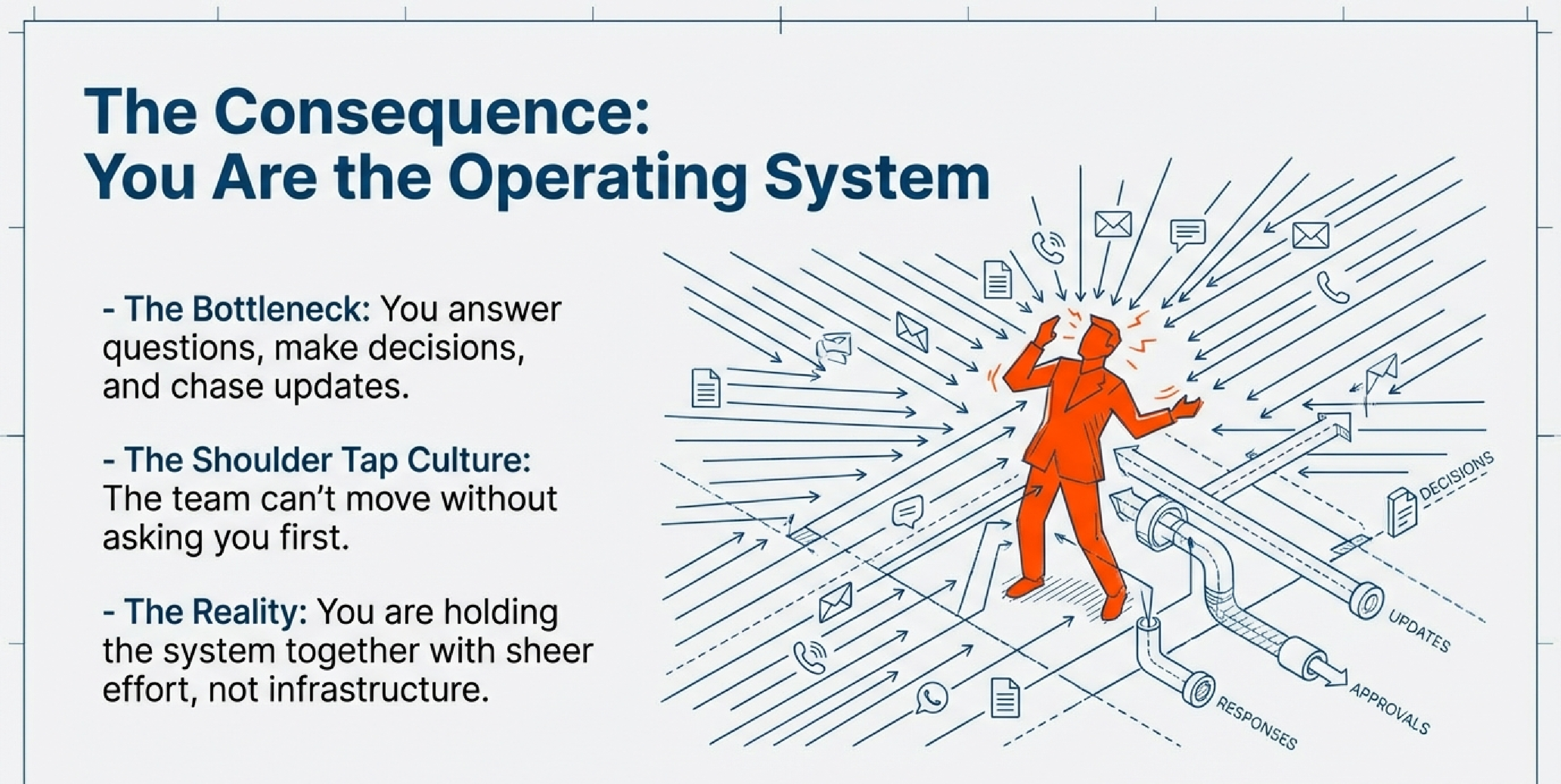
Leadership is still the operating system.
The team can't move without asking first. Decisions, approvals, and updates route through the same people at the top. The business runs on memory and manual effort, not infrastructure.
AI can't fix that. AI needs a home base: clean workflows, a single source of truth, defined processes. Without that foundation, every tool added becomes another thing to manage.
"AI can't run your business if your business doesn't live anywhere."
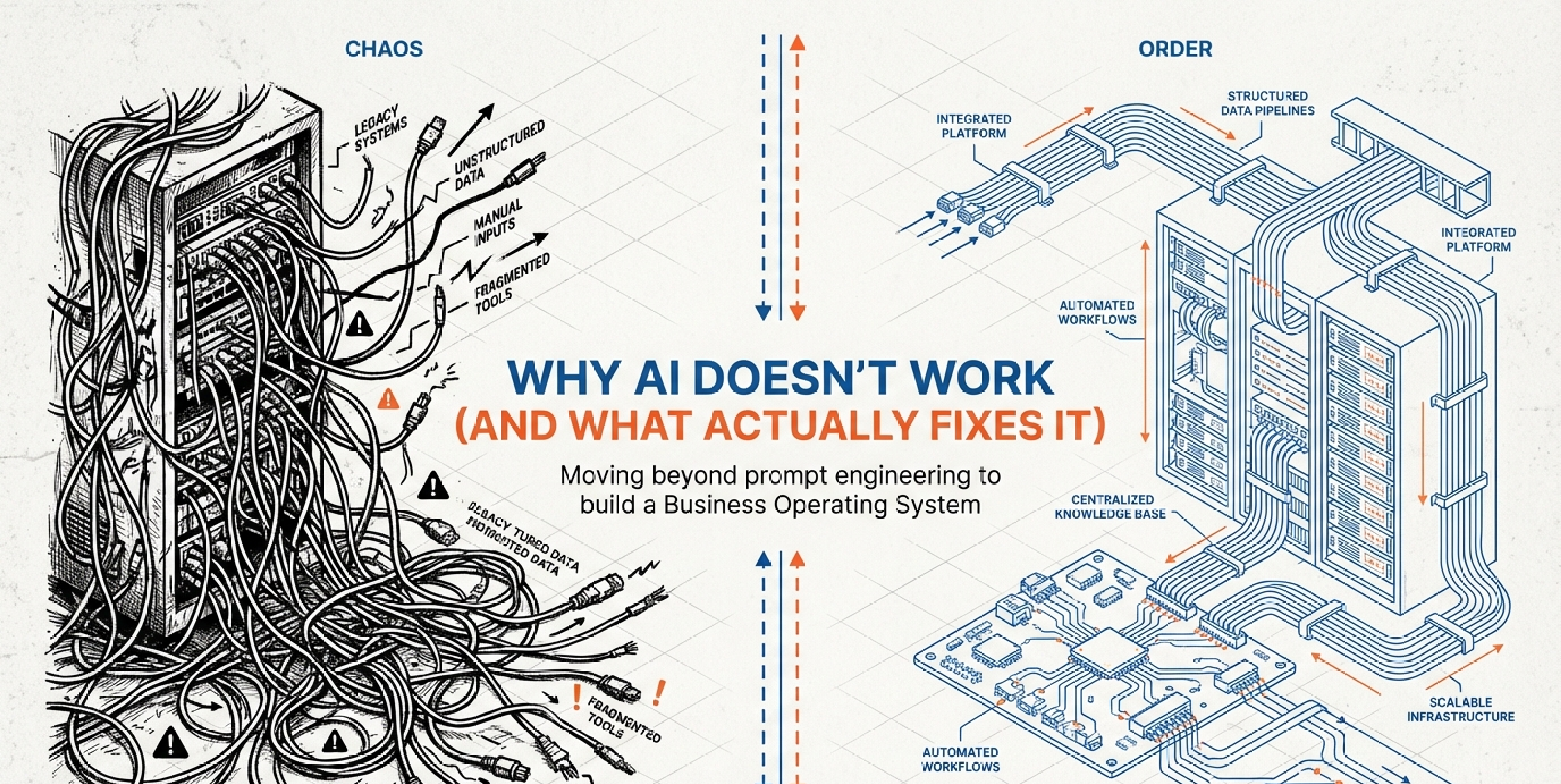
Scattered Data
The business lives in 15 different apps and 3 people's heads.
Disconnected Tools
Pipes connected without plumbing. Nothing talks to anything else reliably.
Leadership as Bottleneck
Every decision and approval routes through the same people at the top.
AI Without Context
Generic prompts on a broken foundation. That is why it did not stick.
The Entry Point
Revenue Friction Mapping.
Before building anything, we work with leadership to identify the 2 workflow pillars carrying the most friction and revenue risk. Those become the focus of a 10-day diagnostic, mapping where the business is actually breaking down, not where leadership thinks it is. The result is a written report that shows where revenue is leaking, calculates the cost of inaction, and tells leadership exactly what to fix first.
What the report delivers
01 Workflow Gap Analysis
Every broken process documented, not summarized.
02 Revenue Impact Calculations
Conservative math. Every assumption shown.
03 Root Cause Documentation
What must work manually before any system is built.
04 Build Sequence
A clear order for what gets fixed first.
10 business days. 2 pillars assessed. Every finding rated. Delivered as a written report leadership can act on immediately.
Discuss Your Revenue GapsHow We Deliver
Six steps. In order. No skipping.
The sequence matters more than the speed. Plugging shiny new AI tools into broken systems produces expensive demos that never become operational leverage.
Deep Analysis
Before building anything, understand everything. Who is on the team, what they actually do, where the handoffs are, where information gets lost.
Define Workflows
Every person knows their inputs, their process, their outputs. This is the foundation everything else stands on.
Build Apps, Modules, and Interfaces
Purpose-built tools for the work that flows through them. Human-in-the-loop interfaces where teams review, approve, and override.
Empower the Team
Every person gets dashboards matched to how they actually work. Reduce noise. Increase signal. Focus on decisions, not busywork.
Layer In the Agents
Only now, with workflows tight and people empowered, introduce AI agents. Agents handle the repetitive. People handle the judgment.
The Autonomous Layer
With the foundation solid, agents operate autonomously within defined boundaries. This is the endgame. But the steps cannot be skipped to get here.
What Changes
What the business looks like when the operating layer works.
The margin hiding inside manual processes shows up on the bottom line.
Hours come back to leadership. Decisions get made faster because the data is already there. Time stops being the most wasted asset in the building.
Scaling without adding headcount becomes the operating model.
The repeatable work runs automatically. The team does more without adding more. Revenue scales without payroll following it.
Leadership focuses on strategy and higher-level decisions.
When the operating layer holds the knowledge, the business runs the same way every day, regardless of who is in the building.
This time the AI actually sticks.
Every initiative before failed at the same point, the layer underneath. This time the foundation gets built first. Real workflows. Real data. Real context. Not another demo that breaks in week three.
Our Focus
Where optimal systems create the most impact.
CPA & Accounting Firms
Funded Technology & AI-Native Companies
Home Services Contractors
Law Firms
Also serving Healthcare, Fintech, Manufacturing, and Wealth Management & RIAs.
From the Field
What operators say after the build.
"We couldn't figure out why the sales funnel wasn't producing. Turns out the leads weren't enriched for the right ICP, so we were working the wrong people. The ones worth working were going cold before anyone touched them, speed to lead was dropping them entirely. ImagineAI reworked the sequence and workflows, and we saw a 15% improvement in conversion the first month. It's been climbing since."
"I built the company to a point where I couldn't leave it alone for a week. After the install, the team runs the same playbook whether I'm in the office or not. That's what I was actually building toward."
The Framework Behind the Build
Built on MIOSA.
MIOSA, Machine Intelligence Optimal System Architecture, is the architectural framework brought to every engagement. It defines how work flows, how decisions get made, how people and agents communicate, and what must be in place before any automation goes live.
It is the reason the build holds together after we leave.
Created by Roberto H. Luna, Founder of MIOSA.
Want to understand the theory behind it? Download the Signal Theory paper →Start with a 20-minute conversation.
Every engagement is scoped to the business. No two operating systems look the same. We assess first. Then we tell you what it takes.
Discuss Your Revenue Gaps